🌿 Premium Nursery Plants 🚚 Free Delivery Above ₹499 🍃 Sustainably Grown & Carefully Nurtured ✨ Elevate Your Living Spaces Naturally

🚚 Free Delivery Above ₹499 | 🌿 7-Day Fresh Guarantee | 💚 Secure Payments

Original Kerala Chowghat Orange Dwarf Coconut Plant (COD) – Early Fruiting Live Palm Tree

Original price was: ₹1,999.00.Current price is: ₹899.00.

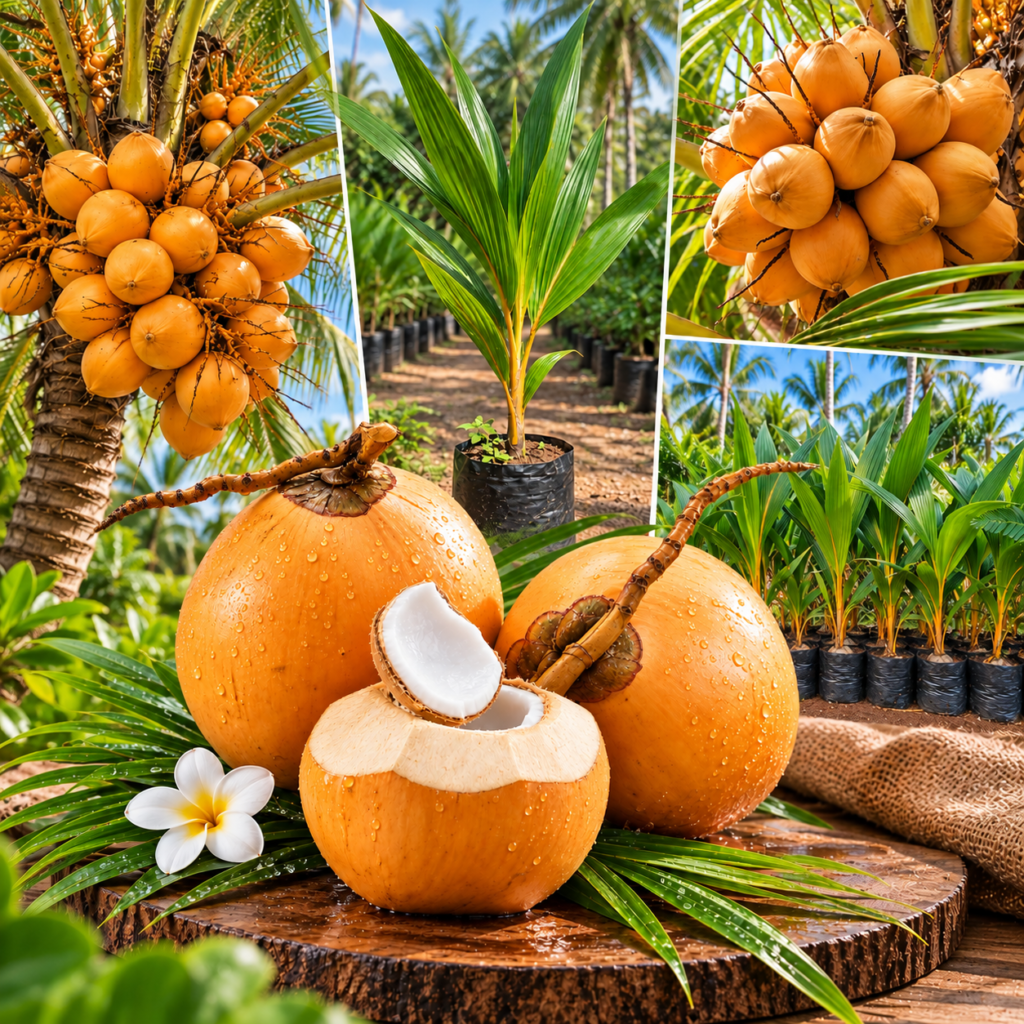
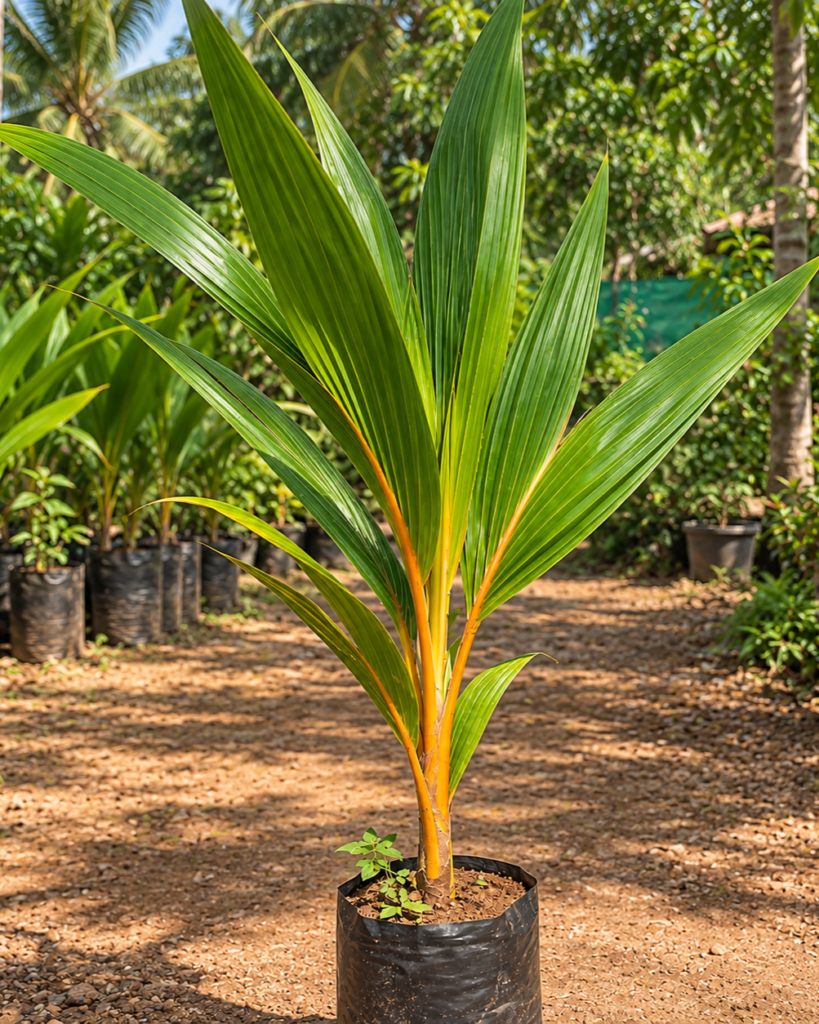
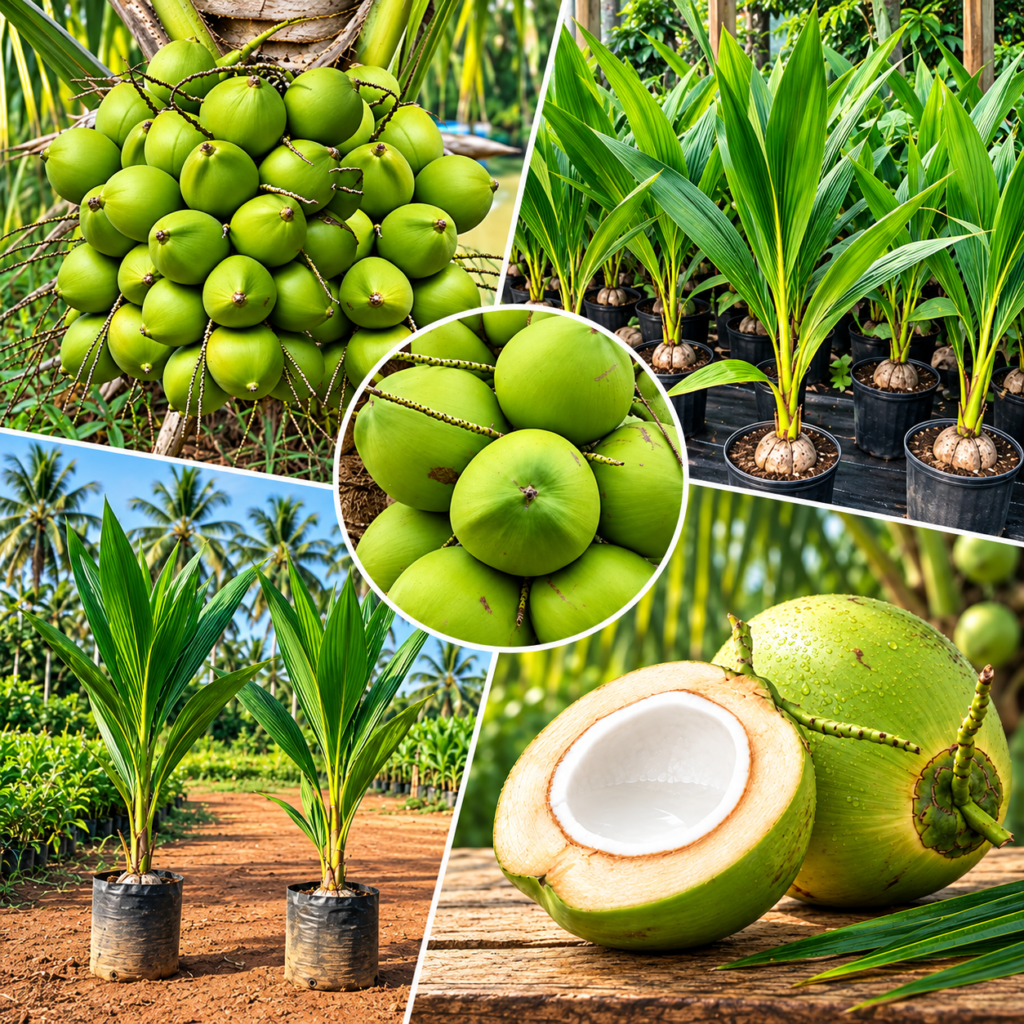
The Kerala Chowghat Orange Dwarf Coconut Plant (commonly designated as COD) is an authentic, high-yielding dwarf palm native to the coastal belts of Kerala. Celebrated by horticultural research institutes and home growers alike, this variety is prized for its early maturation, compact growth habit, and abundant clusters of vibrant orange coconuts. Unlike standard tall varieties that take 7 to 10 years to bear fruit at dangerous climbing heights, the Kerala Chowghat Orange Dwarf Coconut Plant starts producing heavy crops close to chest height in just 36 to 48 months. Beyond its agricultural yields, the Kerala Chowghat Orange Dwarf Coconut Plant…

Buy Now

Description

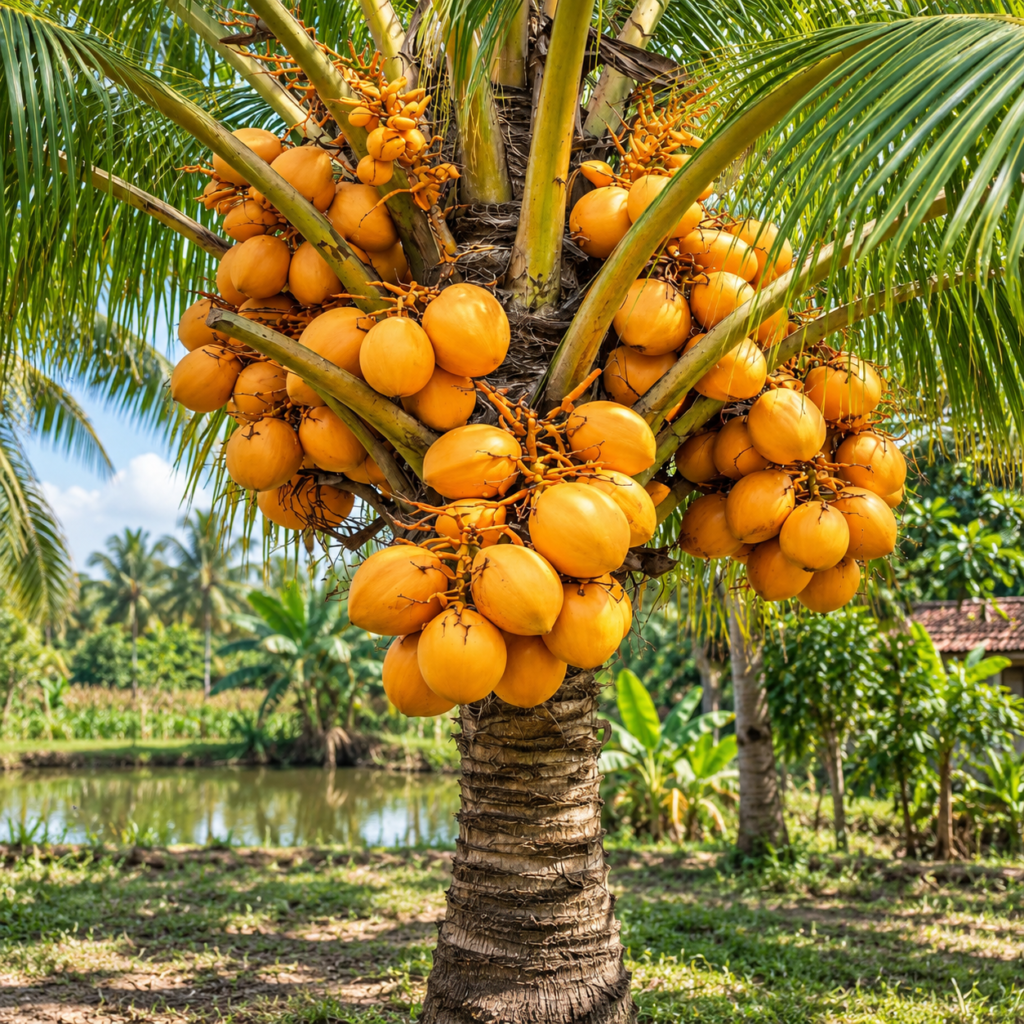
The Kerala Chowghat Orange Dwarf Coconut Plant (commonly designated as COD) is an authentic, high-yielding dwarf palm native to the coastal belts of Kerala. Celebrated by horticultural research institutes and home growers alike, this variety is prized for its early maturation, compact growth habit, and abundant clusters of vibrant orange coconuts. Unlike standard tall varieties that take 7 to 10 years to bear fruit at dangerous climbing heights, the Kerala Chowghat Orange Dwarf Coconut Plant starts producing heavy crops close to chest height in just 36 to 48 months.

Beyond its agricultural yields, the Kerala Chowghat Orange Dwarf Coconut Plant serves as a breathtaking landscape feature. Its distinctive saffron-orange petioles, golden nut clusters, and lush emerald fronds provide an upscale, resort-like tropical aesthetic to any garden border, driveway, or commercial plantation.

Why Choose the Kerala Chowghat Orange Dwarf Coconut Plant?

Traditional tall coconut trees present serious space, maintenance, and harvesting constraints for modern residential plots. The Kerala Chowghat Orange Dwarf Coconut Plant provides practical, high-value advantages:

  • Precocious Flowering & Rapid Returns: The palm initiates flowering within 3 to 4 years of planting, significantly reducing the waiting period for fresh tender coconuts.

  • Effortless Ground-Level Harvesting: Because the trunk elongates slowly, clusters remain within easy reach for several years. You can harvest fresh tender nuts without specialist climbing gear or professional labor.

  • Superior Tender Water Sweetness: Nuts from the Kerala Chowghat Orange Dwarf Coconut Plant contain 350 ml to 450 ml of crystal-clear water with higher natural sugar (brix) levels than typical green varieties, accompanied by delicate, soft kernel meat.

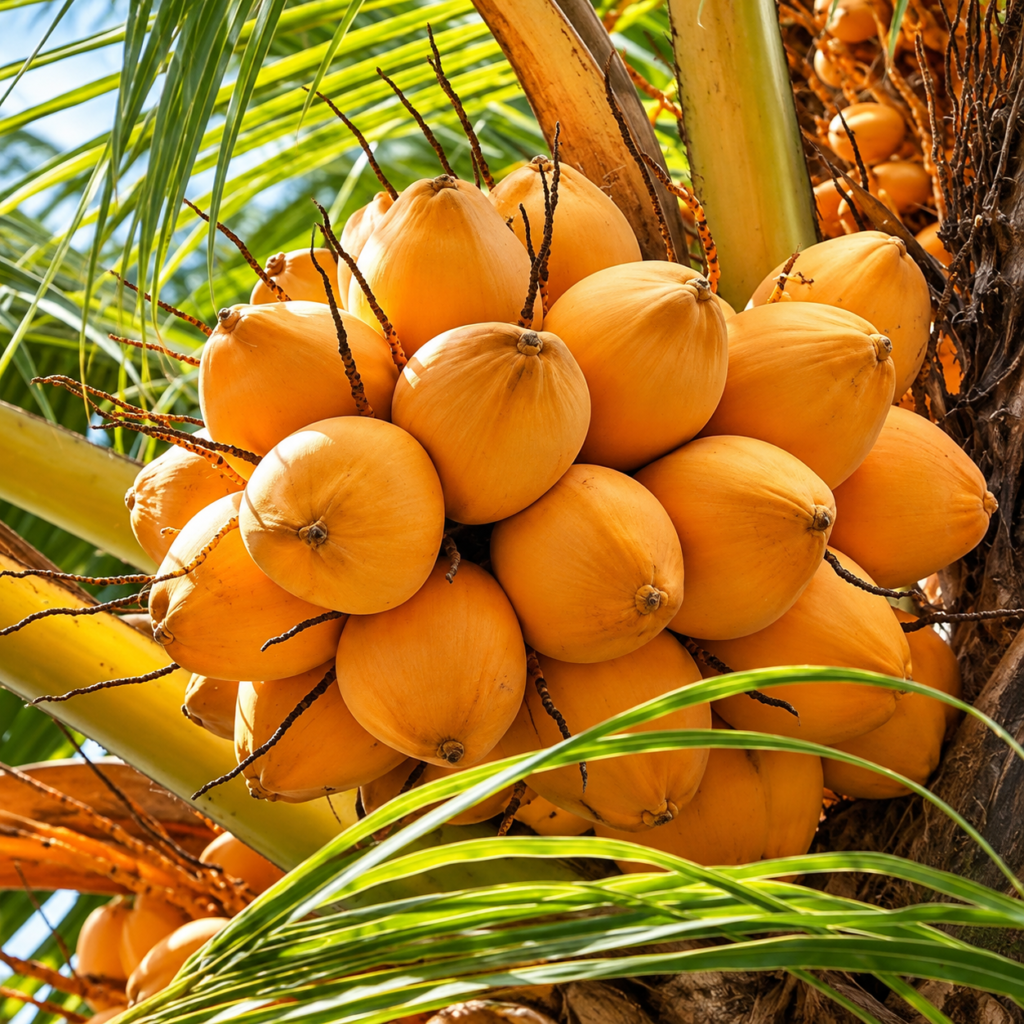
  • High Cluster Density: Mature frond leaf axils support tightly packed clusters bearing 15 to 25 golden nuts per bunch.

  • Ornamental Landscaping Appeal: The vivid golden-orange hue of the stems and nuts creates a striking contrast against green foliage, making it a centerpiece for luxury gardens.

Botanical Characteristics & Variety Specifications

  • Botanical Name: Cocos nucifera var. straminea

  • Variety Designation: Chowghat Orange Dwarf (COD)

  • Origin: Kerala, India

  • Plant Type: Selected true-to-type seed-propagated dwarf palm

  • Nut Color: Bright glowing orange to reddish-yellow

  • Water Volume: Approximately 350 to 450 ml per tender nut

  • Productive Lifespan: 35 to 45 years of continuous commercial bearing

  • Sunlight Requirement: 6 to 8 hours of uninterrupted, direct solar exposure daily

  • Soil Preference: Free-draining sandy loam, red loam, or alluvial soil rich in organic matter

Nutritional & Ayurvedic Value of Orange Tender Coconut

The tender coconut from the Kerala Chowghat Orange Dwarf Coconut Plant is revered in traditional wellness systems:

  • Electrolyte Restoration: Rich in natural potassium, sodium, calcium, and magnesium, orange tender coconut water acts as a rapid isotonic rehydration drink. Further details on the species’ natural history and therapeutic properties can be reviewed on Wikipedia’s Cocos nucifera entry.

  • Gentle on the Digestive System: With minimal acidity and soothing bioactive enzymes, COD tender water is traditionally given to convalescents, children, and athletes to restore gut comfort.

  • Antioxidant Pigments: The orange rind is packed with natural carotenoids and polyphenol compounds that contribute to cellular wellness and immune vitality.

Complete Cultivation Guide for Your Kerala Chowghat Orange Dwarf Coconut Plant

1. Soil Composition & Pit Preparation

Proper site preparation is essential to give the Kerala Chowghat Orange Dwarf Coconut Plant a vigorous start:

  • Pit Size: Dig a planting pit of 3×3×3 feet to facilitate unrestricted root spread.

  • Soil Blend: Mix the dug-up topsoil with 25 kg of decomposed farmyard manure or vermicompost, 2 kg of neem cake (to protect against root grubs and subterranean termites), and 500 grams of bone meal. In clay-heavy soils, blend in 20% coarse river sand to ensure rapid water percolation.

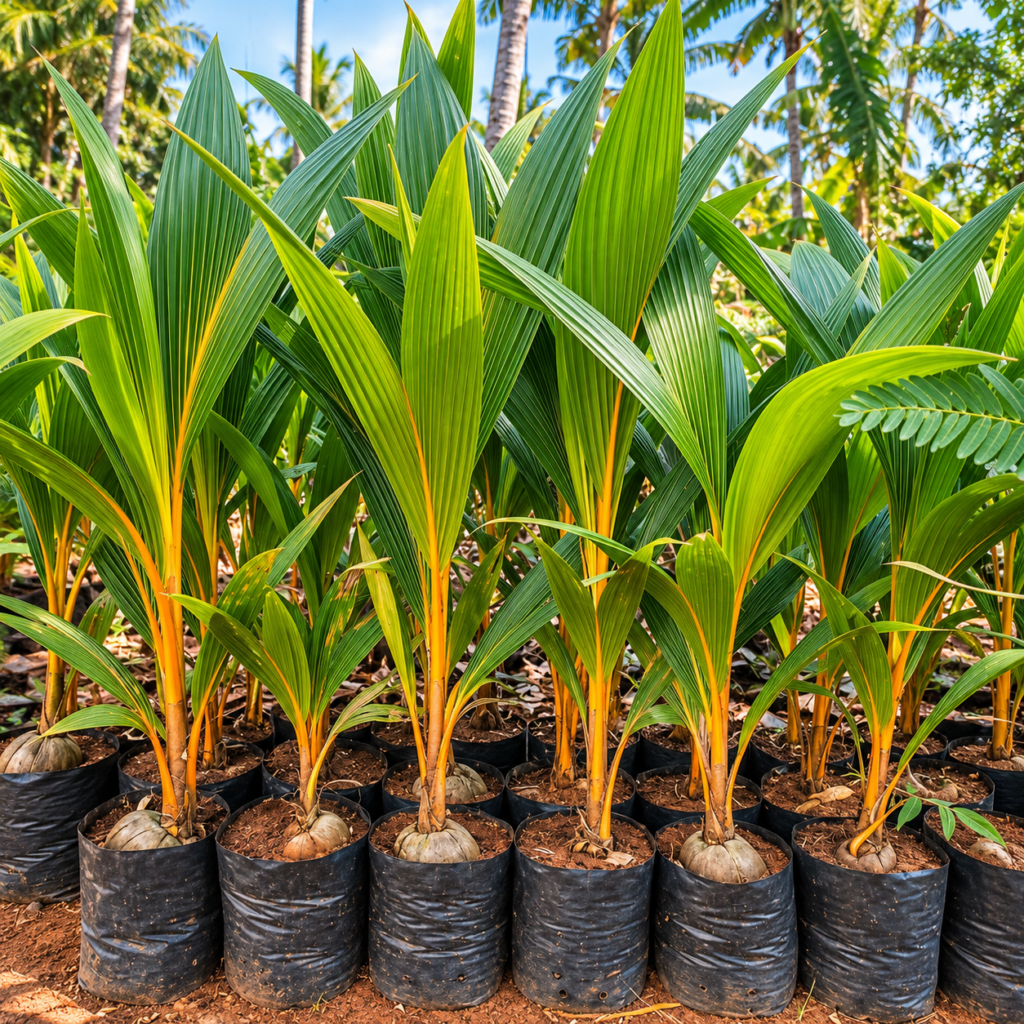
  • Planting Depth: Lower the seedling so the seed nut sits flush with the base of the prepared soil bed, leaving the collar and central spear leaf clear above the ground line. Never bury the bud stem to avoid water logging and crown rot.

2. Sunlight & Placement

Palms demand full, direct solar radiation:

  • Plant your Kerala Chowghat Orange Dwarf Coconut Plant in an open area that receives 7 to 8 hours of unfiltered sunlight.

  • Space palms at least 18 to 22 feet apart from neighboring trees or building structures to guarantee an even, full frond spread.

3. Irrigation Strategy

  • Young Seedlings: Water the plant 2 to 3 times a week, ensuring the soil remains moist without sitting in pooled water.

  • Established Trees: Provide 35 to 50 liters of water per tree every other day during dry summer spells. Drip irrigation rings placed 2 to 3 feet outward from the trunk base deliver optimal results.

  • Mulching: Ring the base with dried leaves or shredded coconut husks (keeping a 6-inch gap from the trunk) to maintain cool root temperatures and reduce evaporation.

4. Nutrition & Fertilization Schedule

To support regular monthly bunch emergence, feed the Kerala Chowghat Orange Dwarf Coconut Plant systematically:

  • Organic Matter: Apply 15 to 20 kg of well-rotted manure twice every year (at pre-monsoon and post-monsoon intervals).

  • Mineral Balance: Apply rock salt (250 to 400 grams annually per tree) around the outer root perimeter to support osmotic regulation and improve kernel firmness.

  • Micronutrients: Supplement with 20 grams of magnesium sulfate (Epsom salt) and 10 grams of borax annually to prevent leaf yellowing and premature button shed.

Frequently Asked Questions

Can the Kerala Chowghat Orange Dwarf Coconut Plant be grown in containers?

While young seedlings can be maintained in large barrels (50–100 liters) for the first 1 to 2 years, coconut palms develop substantial root networks and require ground planting to reach flowering and complete fruit set.

How does Chowghat Orange Dwarf compare to traditional green varieties?

The Kerala Chowghat Orange Dwarf Coconut Plant flowers 2 to 4 years earlier, remains significantly shorter, and bears nuts with sweeter water and an attractive golden-orange color compared to ordinary green tall palms.

Is this variety self-pollinating?

Yes. Chowghat Orange Dwarf palms are self-fertile due to overlapping male and female flowering phases within the same inflorescence, ensuring high natural fruit set even when planted as a single specimen. Pairing it with options from our premium live fruit plants collection further enhances orchard productivity.

Packing, Transit & Acclimatization

Each Kerala Chowghat Orange Dwarf Coconut Plant is inspected for seedling vigor, secured with protected root casing, and packed inside ventilated, crush-resistant cartons.

  1. Unbox Promptly: Open the carton upon delivery to restore fresh air circulation around the palm fronds.

  2. Water Thoroughly: Moisten the nursery polybag soil immediately with fresh water.

  3. Rest in Filtered Shade: Keep the palm in bright, indirect outdoor light for 4 to 5 days to relieve transit stress before planting out into full sunlight.

  4. Planting Time: Transplant during late afternoon hours to minimize root stress, watering deeply immediately after backfilling.

Know more about our fruit plants: https://vaanmitra.in/product-category/buy-fruit-plants-online-india/
Know more about jamun plant: https://simple.wikipedia.org/wiki/Coconut_palm
Reviews

There are no reviews yet.

Be the first to review “Original Kerala Chowghat Orange Dwarf Coconut Plant (COD) – Early Fruiting Live Palm Tree”

Your email address will not be published. Required fields are marked *

Related products

Original Kerala Chowghat Orange Dwarf Coconut Plant (COD) – Early Fruiting Live Palm Tree

Original price was: ₹1,999.00.Current price is: ₹899.00.
Brands:
Buy Now

The Kerala Chowghat Orange Dwarf Coconut Plant (commonly designated as COD) is an authentic, high-yielding dwarf palm native to the coastal belts of Kerala. Celebrated by horticultural research institutes and home growers alike, this variety is prized for its early maturation, compact growth habit, and abundant clusters of vibrant orange coconuts. Unlike standard tall varieties that take 7 to 10 years to bear fruit at dangerous climbing heights, the Kerala Chowghat Orange Dwarf Coconut Plant starts producing heavy crops close to chest height in just 36 to 48 months.

Beyond its agricultural yields, the Kerala Chowghat Orange Dwarf Coconut Plant serves as a breathtaking landscape feature. Its distinctive saffron-orange petioles, golden nut clusters, and lush emerald fronds provide an upscale, resort-like tropical aesthetic to any garden border, driveway, or commercial plantation.

Traditional tall coconut trees present serious space, maintenance, and harvesting constraints for modern residential plots. The Kerala Chowghat Orange Dwarf Coconut Plant provides practical, high-value advantages:

  • Precocious Flowering & Rapid Returns: The palm initiates flowering within 3 to 4 years of planting, significantly reducing the waiting period for fresh tender coconuts.

  • Effortless Ground-Level Harvesting: Because the trunk elongates slowly, clusters remain within easy reach for several years. You can harvest fresh tender nuts without specialist climbing gear or professional labor.

  • Superior Tender Water Sweetness: Nuts from the Kerala Chowghat Orange Dwarf Coconut Plant contain 350 ml to 450 ml of crystal-clear water with higher natural sugar (brix) levels than typical green varieties, accompanied by delicate, soft kernel meat.

  • High Cluster Density: Mature frond leaf axils support tightly packed clusters bearing 15 to 25 golden nuts per bunch.

  • Ornamental Landscaping Appeal: The vivid golden-orange hue of the stems and nuts creates a striking contrast against green foliage, making it a centerpiece for luxury gardens.

Botanical Characteristics & Variety Specifications

  • Botanical Name: Cocos nucifera var. straminea

  • Variety Designation: Chowghat Orange Dwarf (COD)

  • Origin: Kerala, India

  • Plant Type: Selected true-to-type seed-propagated dwarf palm

  • Nut Color: Bright glowing orange to reddish-yellow

  • Water Volume: Approximately 350 to 450 ml per tender nut

  • Productive Lifespan: 35 to 45 years of continuous commercial bearing

  • Sunlight Requirement: 6 to 8 hours of uninterrupted, direct solar exposure daily

  • Soil Preference: Free-draining sandy loam, red loam, or alluvial soil rich in organic matter

Nutritional & Ayurvedic Value of Orange Tender Coconut

The tender coconut from the Kerala Chowghat Orange Dwarf Coconut Plant is revered in traditional wellness systems:

  • Electrolyte Restoration: Rich in natural potassium, sodium, calcium, and magnesium, orange tender coconut water acts as a rapid isotonic rehydration drink. Further details on the species’ natural history and therapeutic properties can be reviewed on Wikipedia’s Cocos nucifera entry.

  • Gentle on the Digestive System: With minimal acidity and soothing bioactive enzymes, COD tender water is traditionally given to convalescents, children, and athletes to restore gut comfort.

  • Antioxidant Pigments: The orange rind is packed with natural carotenoids and polyphenol compounds that contribute to cellular wellness and immune vitality.

Complete Cultivation Guide for Your Kerala Chowghat Orange Dwarf Coconut Plant

1. Soil Composition & Pit Preparation

Proper site preparation is essential to give the Kerala Chowghat Orange Dwarf Coconut Plant a vigorous start:

  • Pit Size: Dig a planting pit of 3×3×3 feet to facilitate unrestricted root spread.

  • Soil Blend: Mix the dug-up topsoil with 25 kg of decomposed farmyard manure or vermicompost, 2 kg of neem cake (to protect against root grubs and subterranean termites), and 500 grams of bone meal. In clay-heavy soils, blend in 20% coarse river sand to ensure rapid water percolation.

  • Planting Depth: Lower the seedling so the seed nut sits flush with the base of the prepared soil bed, leaving the collar and central spear leaf clear above the ground line. Never bury the bud stem to avoid water logging and crown rot.

2. Sunlight & Placement

Palms demand full, direct solar radiation:

  • Plant your Kerala Chowghat Orange Dwarf Coconut Plant in an open area that receives 7 to 8 hours of unfiltered sunlight.

  • Space palms at least 18 to 22 feet apart from neighboring trees or building structures to guarantee an even, full frond spread.

3. Irrigation Strategy

  • Young Seedlings: Water the plant 2 to 3 times a week, ensuring the soil remains moist without sitting in pooled water.

  • Established Trees: Provide 35 to 50 liters of water per tree every other day during dry summer spells. Drip irrigation rings placed 2 to 3 feet outward from the trunk base deliver optimal results.

  • Mulching: Ring the base with dried leaves or shredded coconut husks (keeping a 6-inch gap from the trunk) to maintain cool root temperatures and reduce evaporation.

4. Nutrition & Fertilization Schedule

To support regular monthly bunch emergence, feed the Kerala Chowghat Orange Dwarf Coconut Plant systematically:

  • Organic Matter: Apply 15 to 20 kg of well-rotted manure twice every year (at pre-monsoon and post-monsoon intervals).

  • Mineral Balance: Apply rock salt (250 to 400 grams annually per tree) around the outer root perimeter to support osmotic regulation and improve kernel firmness.

  • Micronutrients: Supplement with 20 grams of magnesium sulfate (Epsom salt) and 10 grams of borax annually to prevent leaf yellowing and premature button shed.

Frequently Asked Questions

Can the Kerala Chowghat Orange Dwarf Coconut Plant be grown in containers?

While young seedlings can be maintained in large barrels (50–100 liters) for the first 1 to 2 years, coconut palms develop substantial root networks and require ground planting to reach flowering and complete fruit set.

How does Chowghat Orange Dwarf compare to traditional green varieties?

The Kerala Chowghat Orange Dwarf Coconut Plant flowers 2 to 4 years earlier, remains significantly shorter, and bears nuts with sweeter water and an attractive golden-orange color compared to ordinary green tall palms.

Is this variety self-pollinating?

Yes. Chowghat Orange Dwarf palms are self-fertile due to overlapping male and female flowering phases within the same inflorescence, ensuring high natural fruit set even when planted as a single specimen. Pairing it with options from our premium live fruit plants collection further enhances orchard productivity.

Packing, Transit & Acclimatization

Each Kerala Chowghat Orange Dwarf Coconut Plant is inspected for seedling vigor, secured with protected root casing, and packed inside ventilated, crush-resistant cartons.

  1. Unbox Promptly: Open the carton upon delivery to restore fresh air circulation around the palm fronds.

  2. Water Thoroughly: Moisten the nursery polybag soil immediately with fresh water.

  3. Rest in Filtered Shade: Keep the palm in bright, indirect outdoor light for 4 to 5 days to relieve transit stress before planting out into full sunlight.

  4. Planting Time: Transplant during late afternoon hours to minimize root stress, watering deeply immediately after backfilling.

Know more about our fruit plants: https://vaanmitra.in/product-category/buy-fruit-plants-online-india/
Know more about jamun plant: https://simple.wikipedia.org/wiki/Coconut_palm
There are no reviews yet.

Be the first to review “Original Kerala Chowghat Orange Dwarf Coconut Plant (COD) – Early Fruiting Live Palm Tree”

Your email address will not be published. Required fields are marked *

Related products

0
0
Your Cart
Your cart is empty